
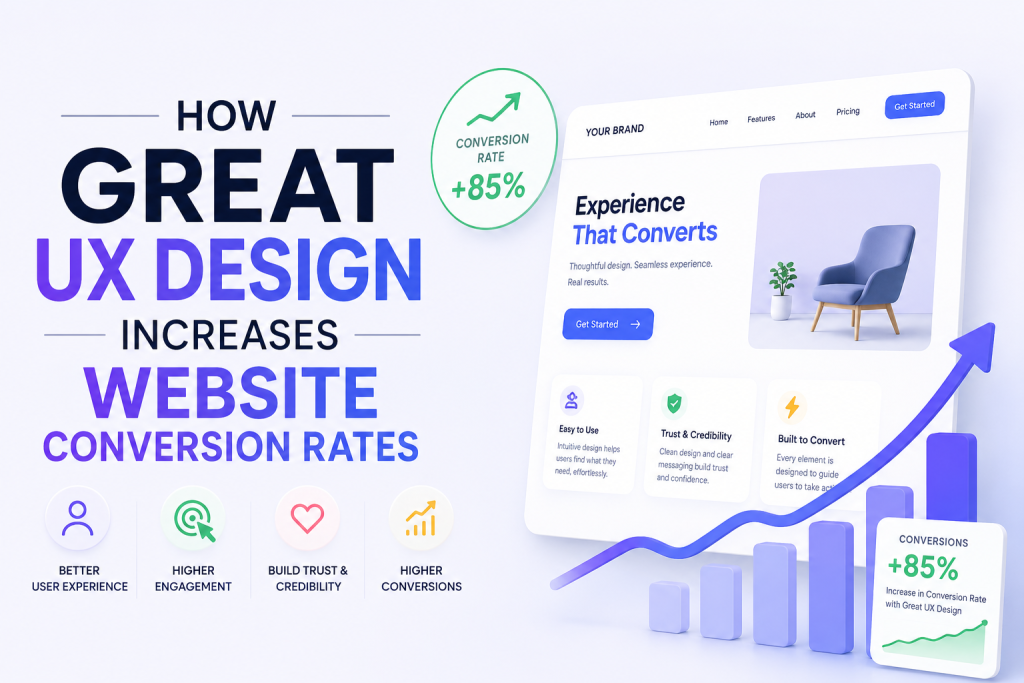
In today’s digital marketplace, attracting visitors to a website is only half the challenge. The real goal is turning those visitors into customers, subscribers, leads, or buyers. While marketing campaigns, SEO, and paid advertising help bring traffic, user experience (UX) design plays a major role in determining whether those visitors take action or leave without engaging.
“Did you know? Studies have shown that users often decide whether to stay on a website within just a few seconds of landing on it. This means design, usability, and page clarity can influence conversions almost immediately.”
A website may offer excellent products or services, but if users struggle to navigate pages, locate information, or complete a purchase, conversion rates can suffer. Great UX design removes obstacles, improves usability, and encourages visitors to move through the customer journey with confidence.
This blog explains how UX design directly impacts website conversion rates and why businesses should make it a priority.
Key Takeaways
- UX design directly affects website conversion rates.
- Clear navigation helps users find information faster.
- Faster loading pages reduce visitor abandonment.
- Mobile-friendly websites convert more users.
- Strong calls-to-action encourage desired actions.
- Trust signals increase customer confidence.
- Simple forms improve lead generation.
- Readable content keeps visitors engaged.
What Is UX Design?
UX design focuses on how users interact with a website. It involves creating an experience that is intuitive, efficient, and enjoyable. Every element from navigation menus and page layouts to forms and buttons contributes to the overall user experience.
A well-designed website helps users achieve their goals quickly. Whether someone wants to make a purchase, schedule a consultation, download a resource, or sign up for a newsletter, UX design helps guide them toward that action.
Why Businesses Partner with a UI & UX Design Services Company
A professional UI & UX Design services company focuses on creating websites that balance visual appeal with usability. While UI (User Interface) design focuses on the look and feel of a website, UX (User Experience) design focuses on how users interact with it.
Businesses often work with UI and UX specialists to:
- Improve website usability
- Increase conversion rates
- Reduce bounce rates
- Enhance mobile experiences
- Create consistent brand experiences
- Optimize customer journeys
By combining design expertise with user behavior insights, a UI & UX design team can help businesses create websites that support both customer satisfaction and business goals.
Why UX Design Matters for Conversions
Conversion rates measure the percentage of visitors who complete a desired action. These actions may include:
- Purchasing a product
- Filling out a contact form
- Booking a service
- Downloading content
- Signing up for emails
- Requesting a quote
When users encounter confusion, delays, or frustration, they are more likely to leave the website. Good UX design reduces these issues and increases the likelihood of conversion.
Research consistently shows that users form opinions about a website within seconds. If a website appears difficult to use or visually cluttered, visitors often leave before interacting further.
First Impressions Influence User Decisions
The first few moments on a website can determine whether a visitor stays or leaves. A clean layout, organized content, and professional appearance create confidence.
When visitors arrive on a website, they expect to immediately understand:
- What the business offers
- How the website is organized
- Where they should go next
If users cannot find these answers quickly, they may abandon the site.
Strong UX design creates a positive first impression by presenting information clearly and minimizing distractions.
Simple Navigation Helps Users Take Action
Navigation serves as the roadmap of a website. If users cannot locate what they need, they are unlikely to convert.
Effective navigation includes:
- Clear menu labels
- Logical page structure
- Search functionality
- Consistent navigation across pages
- Easy access to important information
Visitors should never feel lost while browsing. The easier it is to move through a website, the easier it becomes for users to complete desired actions.
Businesses that simplify navigation often see improved engagement and higher conversion rates because users spend less time searching and more time taking action.
Related Blog:- Top UX Design Companies in the Bahamas: What to Look For
Faster Loading Speeds Reduce Abandonment
Website speed has a direct impact on user behavior.
Visitors expect websites to load quickly. Delays can lead to frustration and increased bounce rates. Even a few extra seconds of loading time can cause potential customers to leave before viewing products or services.
UX design includes performance optimization techniques such as:
- Compressing images
- Reducing unnecessary code
- Optimizing server performance
- Limiting heavy visual elements
A fast website creates a smoother user journey and encourages visitors to continue interacting with content.
Mobile-Friendly Design Drives More Conversions
Mobile traffic now accounts for a large portion of website visits across many industries. If a website does not perform well on smartphones and tablets, businesses risk losing valuable opportunities.
Mobile-friendly UX design includes:
- Responsive layouts
- Readable text sizes
- Touch-friendly buttons
- Optimized images
- Simplified forms
Users should be able to complete tasks on mobile devices as easily as they would on a desktop computer.
When mobile visitors encounter a positive experience, they are more likely to convert.
Clear Calls-to-Action Improve Results
Calls-to-action (CTAs) guide users toward specific actions.
Examples include:
- Get a Free Quote
- Schedule a Consultation
- Start Your Trial
- Download the Guide
- Buy Now
A common UX mistake is placing CTAs where users cannot easily find them or using unclear language.
Effective CTAs are:
- Visible
- Easy to understand
- Relevant to user intent
- Positioned strategically throughout the page
Good UX design ensures that users always know what step to take next.
Trust Signals Increase User Confidence
Trust plays a major role in online conversions. Visitors are more likely to engage with businesses that appear credible and reliable.
UX design can strengthen trust through:
- Customer testimonials
- Reviews and ratings
- Security badges
- Professional visuals
- Transparent pricing
- Clear contact information
When users feel confident about a website, they are more comfortable sharing personal information or making purchases.
Trust-building elements should be integrated naturally throughout the website rather than hidden on isolated pages.
Easy Forms Generate More Leads
Forms are often critical conversion points. Whether users are requesting information or making a purchase, complicated forms can reduce completion rates.
Many websites lose potential leads because they ask for too much information.
Good UX design improves forms by:
- Reducing unnecessary fields
- Providing clear instructions
- Displaying helpful error messages
- Using logical field order
- Making forms mobile-friendly
The easier a form is to complete, the higher the likelihood that users will submit it.
Content Readability Impacts User Engagement
Visitors rarely read every word on a webpage. Most people scan content before deciding whether to engage further.
UX design improves readability through:
- Clear headings
- Short paragraphs
- Bullet points
- White space
- Consistent typography
Well-structured content helps users locate information quickly and encourages them to stay on the page longer.
Improved engagement often leads to higher conversion rates because users can easily absorb important information.
Reducing Friction Throughout the User Journey
Friction refers to anything that makes it harder for users to complete a task.
Examples include:
- Complex checkout processes
- Confusing navigation
- Slow loading pages
- Excessive form fields
- Unexpected fees
- Poor mobile usability
Every obstacle increases the chance that visitors will abandon the process.
UX designers focus on identifying and removing friction points to create a more efficient path toward conversion.
Even small improvements can have a noticeable impact on results.
Consistency Builds Familiarity
Consistency helps users feel comfortable while interacting with a website.
Consistent design includes:
- Matching colors
- Uniform typography
- Standard button styles
- Predictable navigation
- Similar layouts across pages
When elements behave consistently, users spend less mental effort figuring out how the website works.
This allows them to focus on completing actions rather than learning new interface patterns.
Data-Driven UX Improvements
Great UX design is not based on assumptions. Successful businesses regularly test and refine their websites using real user data.
Common methods include:
- Heatmaps
- Session recordings
- User testing
- A/B testing
- Analytics reviews
These tools help identify areas where users encounter difficulties.
By continuously improving the user experience, businesses can steadily increase conversion rates over time.
The Financial Impact of Better UX
Investing in UX design can produce measurable business benefits.
Improved UX often leads to:
- Higher conversion rates
- Increased revenue
- Better customer satisfaction
- Lower bounce rates
- More repeat customers
- Stronger brand perception
Rather than spending additional money solely on acquiring more traffic, businesses can generate better results from existing traffic by improving the user experience.
This makes UX design one of the most valuable long-term investments for digital growth.
Ready to Improve Your Website Conversions?
If your website attracts visitors but struggles to generate leads, inquiries, or sales, it may be time to evaluate the user experience. Small UX improvements can make a significant difference in how users interact with your website and whether they choose to take action.
At Cloud10 UX, we specialize in creating websites that help businesses reduce friction, improve usability, and increase conversion rates. From UX audits and website redesigns to conversion-focused optimization, our team works to create experiences that turn visitors into customers.
Contact Cloud10 UX today to learn how strategic UX design can help your business achieve higher conversions, stronger engagement, and long-term digital growth.
Frequently Asked Questions
What is UX design in web development?
UX design refers to the process of creating a website that is easy, efficient, and enjoyable for users to interact with. It focuses on usability, accessibility, navigation, and overall user satisfaction.
How does UX design affect conversion rates?
UX design removes barriers that prevent users from completing desired actions. Better usability, faster performance, and clear navigation often result in higher conversion rates.
Why is mobile UX important for conversions?
Many users access websites through smartphones. A mobile-friendly design helps visitors navigate, read content, and complete actions more easily, leading to better conversion results.
What are common UX mistakes that reduce conversions?
Common mistakes include slow page speeds, confusing navigation, cluttered layouts, lengthy forms, poor mobile optimization, and unclear calls-to-action.
How can businesses measure UX performance?
Businesses can measure UX performance using analytics, heatmaps, user testing, session recordings, bounce rates, and conversion rate tracking tools.