
Commercial Real Estate SEO + GEO: Turning Local Search Into Foot Traffic in 6 Months
KEY RESULT
102K
search impressions in 6 months (from zero)
1,260+
organic clicks from Google (from zero)
706
ranking keywords, up from 306 (+131%)
5
keywords holding the #1 spot on Google
+60%
monthly organic traffic (1K to 1.6K)
56.7%
of all sessions now come from organic search
300+
lead & contact form interactions tracked
15
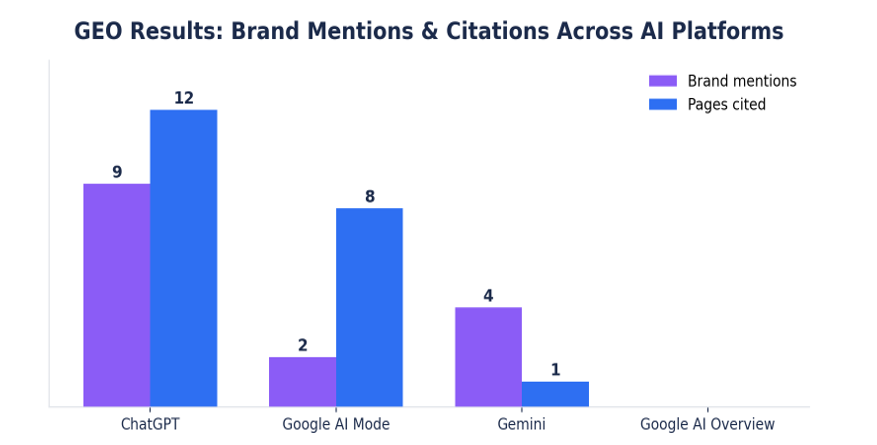
brand mentions across ChatGPT, Gemini & Google AI
Project Overview
- Industry
- Primary Channel
- Supporting Channels
- Target Audience
- Engagement Length
- Location
A Well-Known Commercial Property That Was Invisible Online
Our client is a well-established commercial real estate property in The Bahamas: a retail shopping plaza home to dozens of tenants spanning fashion, footwear, dining, groceries, beauty, banking, healthcare, and everyday services. Locally, the plaza is a household name with steady foot traffic and free on-site parking.
Online, it barely existed. Shoppers searching for “best shopping plaza near me,” looking up store hours, or asking AI assistants where to shop were finding competitors instead. The property needed a digital presence that matched its real-world footprint, and it needed to show up not just on Google, but inside the AI answers that increasingly shape where people shop. For a commercial real estate owner, that visibility directly affects foot traffic, tenant performance, and the property’s leasing story.
The Challenge: Starting From Zero
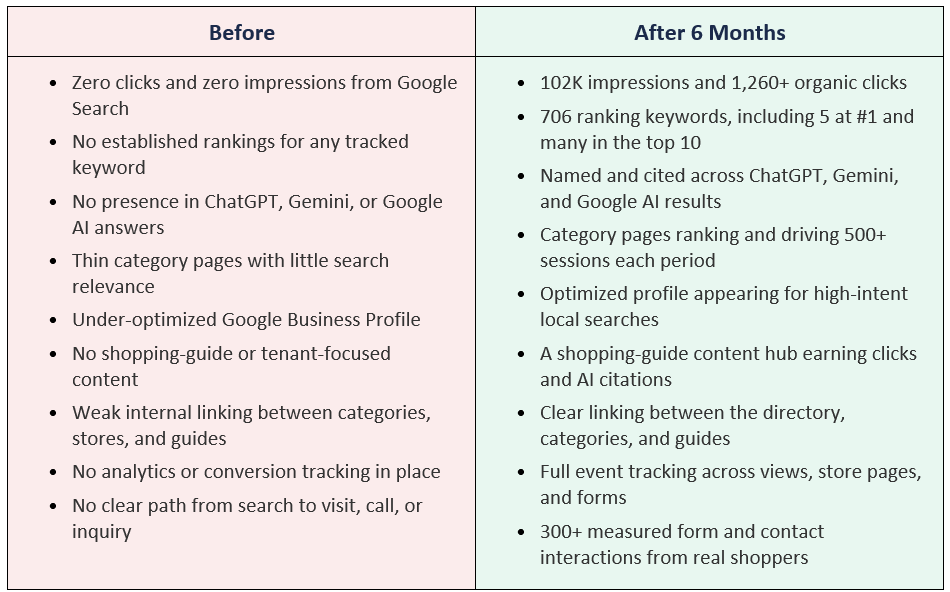
- The website was generating effectively zero clicks and zero impressions from Google Search.
- None of the plaza's target keywords, including its own brand terms, tenant-related searches, and local shopping queries, had established rankings.
- ChatGPT, Gemini, and Google's AI Overviews didn't mention the plaza when users asked where to shop, eat, or run errands in the area.
- Category and store-directory pages were thin and under-optimized for how shoppers actually search.
- The Google Business Profile was underutilized and inconsistent with the website.
- There was little content answering the questions shoppers ask before choosing where to go.
- Internal linking between the directory, category pages, and content was weak.
- Strong competition from larger, better-known malls dominated both search results and AI answers.
- There was no reliable analytics or conversion tracking in place to measure visits, store-page interest, or leads.
Turning Search Visibility Into Shopper Opportunities
- Establishing Google Search visibility from a zero baseline
- Ranking for high-intent local shopping and tenant-related keywords
- Growing qualified organic traffic that reflects real shopper intent
- Winning mentions and citations inside ChatGPT, Gemini, and Google's AI results
- Strengthening the Google Business Profile and local map visibility
- Improving category and store-directory page performance
- Increasing directions requests, store-page views, inquiries, and commercial leasing interest
- Building measurement into everything so results could be proven, not assumed
The Strategy: SEO and GEO Working as One System
- Shopping plaza in [City]
- Best shopping plaza / mall in [City]
- Shopping mall outside [busy downtown area]
- [Plaza name] store directory, hours, and stores
- [Tenant name] + [Plaza name] (searches for individual stores and restaurants)
- Shopping on [the plaza’s road / area]
- One-stop shopping in [City]
- Family-friendly shopping in [City]
- Shopping plazas near [the airport / landmark]
- Where can I eat on [the plaza’s road]?
The Results: Six Months, Four Fronts
Result 1: Google Search Visibility Built From Nothing
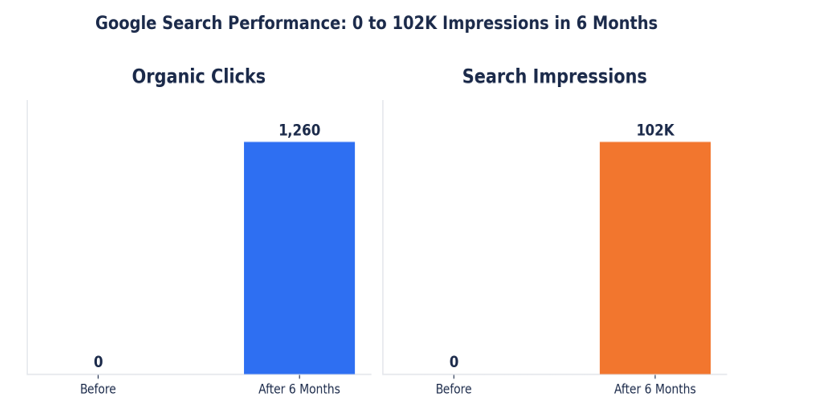
In six months, the site went from a standing start to more than 102,000 search impressions and 1,260+ organic clicks, with an average position of 7.8, meaning the plaza now routinely appears on page one for its target searches. Branded, tenant-related, directory, and local shopping queries all generate consistent clicks, with the top brand query alone earning 182 clicks.- Search impressions: 0 to 102K
- Organic clicks: 0 to 1,260+
- Average position: 8 (page one)
- Top-performing pages: Homepage (568 clicks) and Retail category (519 clicks)
Result 2: Rankings Where They Matter
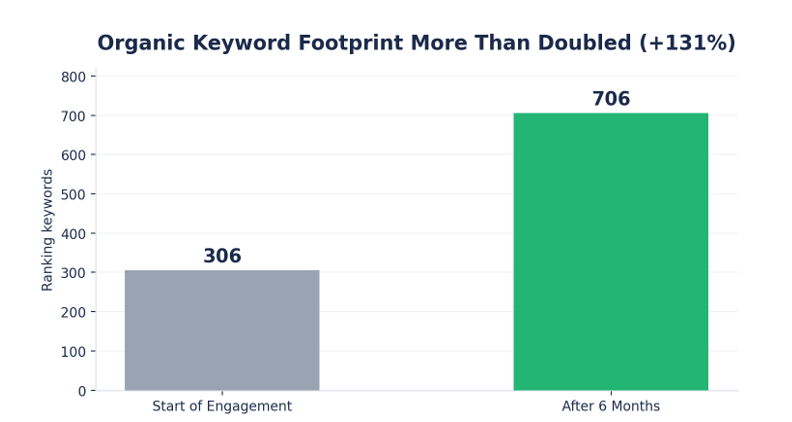
The plaza’s keyword footprint more than doubled, from 306 to 706 ranking keywords (+131%). Every tracked priority keyword moved from unranked to an established position, including five keywords holding the #1 spot on Google and a broad set ranking in the top 10 for brand, tenant, and local shopping searches.- Ranking keywords: 306 to 706 (+131%)
- Keywords at #1 on Google: 5
- Tracked keywords now ranked: 100% (from an unranked baseline)
- Keywords ranking in the Bahamas market: 668
Result 3: Organic Search Became the #1 Traffic Channel
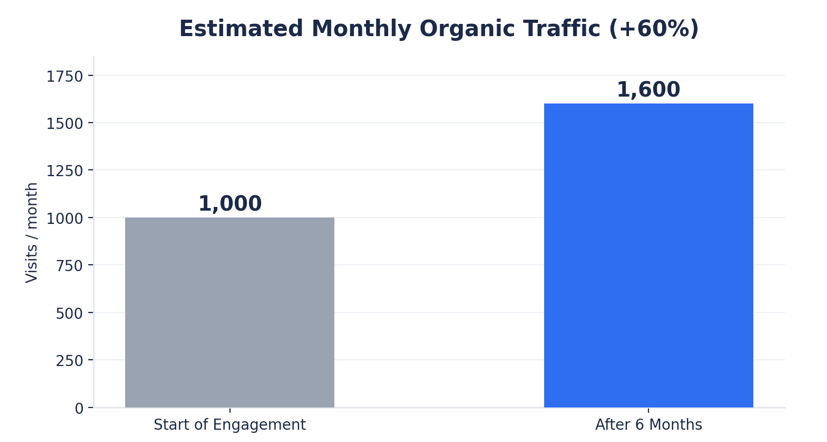
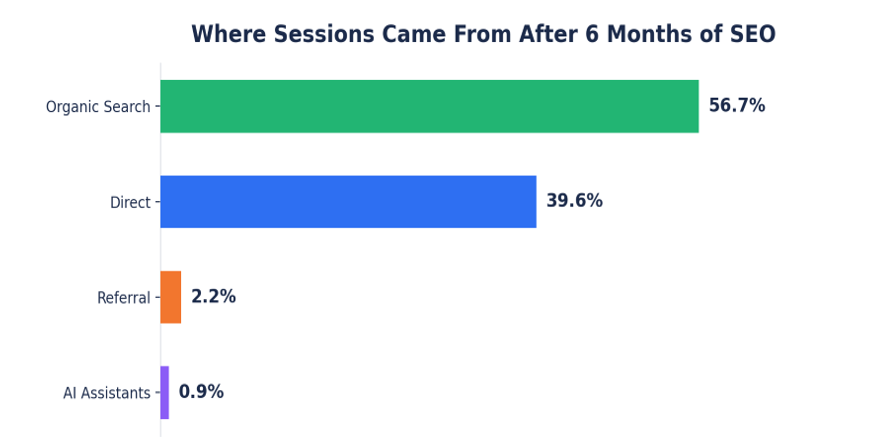
Estimated monthly organic traffic grew roughly 60%, from about 1,000 to 1,600 visits per month. More importantly, organic search became the single largest source of website sessions at 56.7%, and the most engaged one, with organic visitors showing a 52.5% engagement rate versus 18% for direct traffic.- Monthly organic traffic: 1,000 to 1,600 (+60%)
- Share of sessions from organic search: 7%
- Organic engagement rate: 5% (vs 18% for direct)
- Total users in the period: 1K, with 4,000+ page views
- Store-page views: 1,400+
Result 4: Recommended by ChatGPT, Gemini & Google AI
This is where GEO pays off. Within six months, the plaza earned 15 brand mentions and 15 cited pages across AI platforms, including ChatGPT, Google’s AI Mode, and Gemini. Traffic from AI assistants now appears as its own measurable channel in analytics.- Brand mentions across AI platforms: 15
- Pages cited by AI platforms: 15
- Platforms recommending the plaza: ChatGPT, Google AI Mode, Gemini
- AI assistants as a traffic channel: Now tracked and growing
Result 5: Real Shopper Actions, Not Vanity Traffic
Because measurement was built in from day one, we can see what visitors actually did: 1,400+ store-page views, 800+ scroll engagements, 209 form submissions, 167 form starts, and 94 contact submissions from over 100 unique users. These are shoppers checking stores before a visit, and prospective tenants and partners reaching out.- Form submissions: 209
- Contact submissions: 94 (from 100+ unique users)
- On-site search usage: 88 searches, showing active shopper intent
Turning Search Visibility Into Real Commercial Real Estate Value
- Increased visibility among shoppers actively deciding where to shop, dine, and run errands
- More qualified visitors reaching store and category pages before a visit
- Greater presence across local search, Google Maps, and AI-generated recommendations
- Stronger visibility for individual tenants, which supports tenant satisfaction, retention, and occupancy
- A new stream of commercial leasing and partnership inquiries through tracked contact forms
- An early-mover advantage in AI search that competitors have not yet established
- A durable SEO and GEO foundation that compounds month over month
From Search to Storefront: The Shopper Journey
Discover
A shopper searches Google or asks an AI assistant where to shop, eat, or find a specific type of store nearby. The plaza now appears in results, map packs, and AI answers at that exact moment.
Compare
The plaza shows up alongside other shopping destinations in search results, Google Maps, AI Overviews, and ChatGPT recommendations, often listed as a top choice with its strengths described.
Explore
The shopper visits the website to browse the store directory, category pages, dining options, opening hours, and shopping guides.
Build Trust
Reviews, an active Google Business Profile, accurate tenant information, photos, and helpful content give the shopper confidence that the trip will be worth it.
Take Action
Clear calls-to-action make it easy to get directions, view a store page, submit an inquiry, or contact the plaza's management or leasing team.
Return & Recommend
A good visit turns searchers into regular shoppers who come back, leave reviews, and mention the plaza in the same conversations AI models learn from.
Why the Strategy Worked
Local Intent First
We prioritized the high-intent searches that connect the plaza's stores and services with shoppers in its area, not vanity keywords.
Category-Level Optimization
Individual category and directory pages gave every part of the plaza its own chance to rank for the searches shoppers actually make.
Tenant-Led Search
Optimizing for tenant and store searches captured shoppers looking for a specific brand, then introduced them to everything else the plaza offers.
A Stronger Local Presence
Google Business Profile optimization, citation consistency, and location signals strengthened the plaza's presence across Search and Maps.
Built for AI From Day One
Entity-rich, well-structured, citable content meant AI platforms could confidently describe and recommend the plaza, turning GEO into a genuine acquisition channel rather than an afterthought.
Content That Answers Real Questions
Shopping guides reached shoppers earlier in their decision while building the topical authority that both Google and AI models reward.
Measured, Then Improved
Full event tracking meant every decision was informed by real behavior, and every result reported here is backed by data, not estimates.
The Takeaway
Search behavior is splitting between Google and AI assistants, and this engagement proves commercial real estate can win both at once. Six months of combined SEO + GEO turned a property with zero digital search presence into the answer Google ranks and AI recommends. For property owners, that's the difference between being findable and being chosen, and it compounds into foot traffic, tenant value, and leasing demand.
Want Results Like These?
Whether you own a shopping plaza, an office complex, or a mixed-use development, or you run any local business starting from zero, Cloud10 UX can build a search and AI visibility strategy around it. Get found on Google. Get recommended by AI. Get more customers through the door.

At Cloud10 UX, we combine research, strategy, and clean design to create products that work beautifully and deliver measurable impact.
Copyright © 2026. All Rights Reserved.